
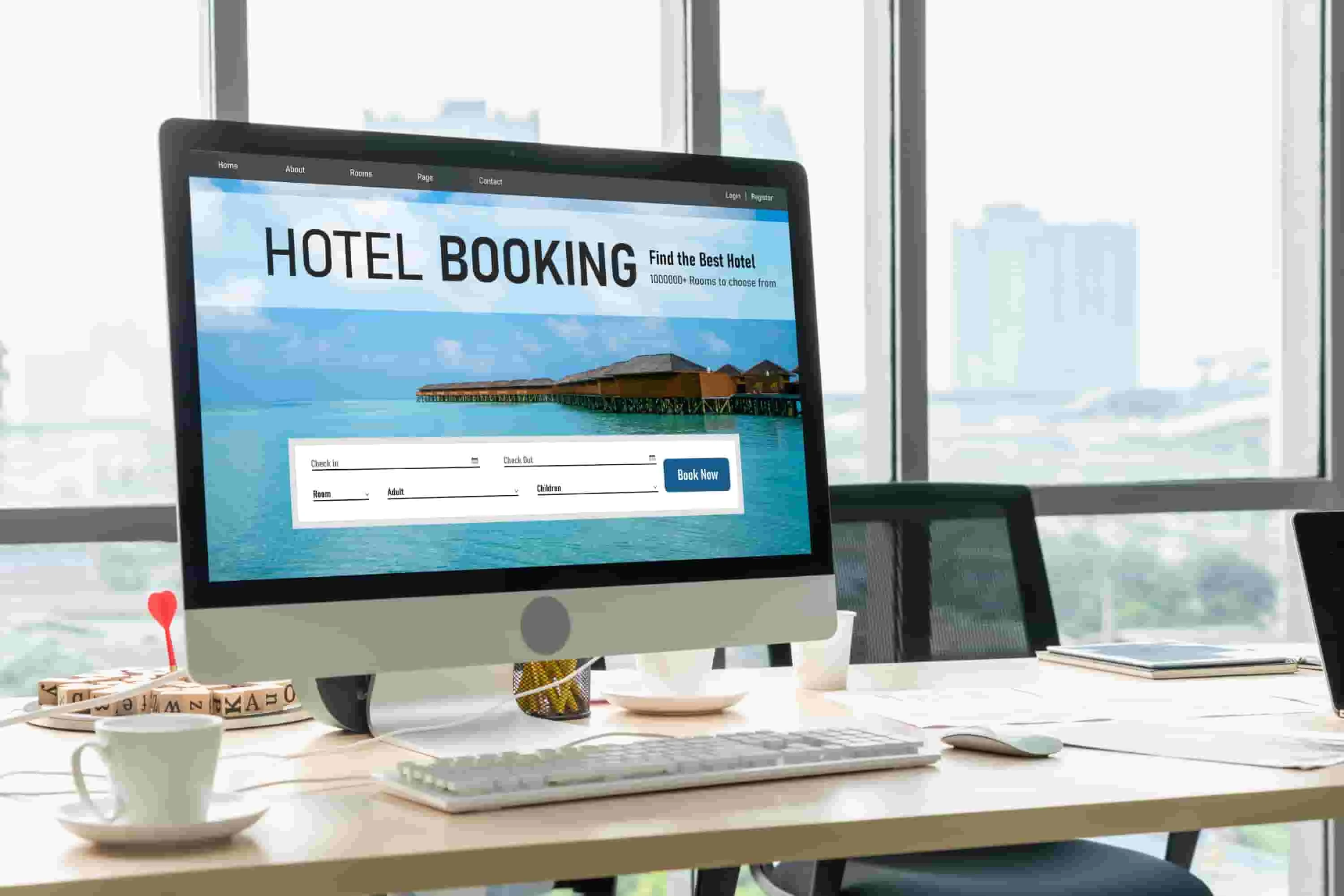
Hotel Booking Website Development in Nepal: Complete Guide, Features, Cost and Process
The hotel industry in Nepal is becoming increasingly digital. Travelers no longer depend only on travel agents, phone calls, or walk-in reservations to find accommodation. Before booking, guests often search online, compare room types, check prices, view photographs, read reviews, examine amenities, and look for convenient payment and cancellation options.
For hotels, resorts, boutique properties, guesthouses, homestays, and hospitality groups, this shift has made a professional online booking platform an essential part of modern hotel operations.
A well-designed hotel website can do much more than display rooms and contact information. Guests can search availability, compare room types, select dates, make reservations, pay online, and receive confirmations. At the same time, hotel staff can use an administrative system to control room inventory, rates, reservations, customers, promotions, payments, and reporting.
A hotel website also provides an opportunity to reduce dependence on third-party booking platforms. Online travel agencies can provide valuable exposure, but they charge commissions and control part of the customer relationship. A hotel’s own booking website gives the property greater control over its brand, customer experience, booking process, and direct marketing.
What Is a Hotel Booking Website?
A hotel booking website is an online platform that allows guests to discover accommodation and make reservations directly. A basic site may simply provide information, while a complete booking platform lets guests select check-in and check-out dates, enter guest counts, view available rooms, compare rates, select a room, add optional services, provide personal information, choose a payment method, and receive booking confirmation.
On the administrative side, hotel employees can manage rooms, availability, reservations, guests, pricing, payments, promotions, and operational information — connecting the guest-facing website with the hotel’s reservation workflow.
Why Do Hotels in Nepal Need an Online Booking Website?
Travelers increasingly research accommodation online before arriving in Nepal. A Kathmandu traveler may compare several hotels; a Pokhara guest may search near specific attractions; international visitors may want to review facilities, policies, room photographs, prices, and location information before reserving.
A professional hotel website lets the property communicate directly with potential guests, accept direct bookings without third-party commissions, and connect to SEO, Google Ads, social media, email campaigns, travel content, and other marketing channels.
Direct Booking vs Third-Party Platforms
Online travel agencies can provide access to a large audience, but direct bookings offer different advantages. When a guest books through the hotel’s own website, the property has more control over the booking experience, brand story, facility presentation, packages, direct-booking benefits, and policy communication.
Third-party platforms remain useful as distribution channels. The goal is a healthy balance between third-party and direct reservations, with the hotel’s website as the central destination for guests arriving from search engines, social media, referrals, or advertisements.
Essential Features of a Hotel Booking Website
Room Search and Availability
Guests should be able to enter check-in and check-out dates, guest counts, and other criteria. The system then checks available inventory and displays suitable options. Availability must connect to actual room inventory to reduce the risk of accepting reservations for already-occupied rooms.
Room Type Management
Hotels may have multiple room categories — standard, deluxe, suites, family, executive, or other types. Each room type can contain photographs, descriptions, occupancy limits, bed configuration, amenities, pricing, policies, and availability. The system should also distinguish between a room type and individual physical rooms where necessary.
Room Details
A room page should display photographs, room size, bed type, maximum occupancy, amenities, view, included services, breakfast, cancellation policy, check-in and check-out times, available rates, and additional charges where applicable.
Real-Time Availability
When a reservation is made, inventory should update. If ten rooms of a category are available and three are already booked, the site should reflect the remaining availability. Real-time inventory management helps prevent double bookings, and integration with a channel manager or PMS may be required for hotels selling across multiple channels.
Online Reservation System
The reservation system is the core of the platform. A typical booking flow: search dates → select room → select rate → enter guest information → add extras → review booking → payment → confirmation. The final price should display clearly before the guest confirms.
Multi-Room Booking
Families, friends, corporate groups, and tour groups may need multiple rooms within a single reservation. Guests should be able to select the number of rooms and assign guest information. Larger groups can follow a separate inquiry workflow where the sales team prepares a customized quotation.
Guest Information Management
The system collects guest details required for reservation and operational purposes — name, contact details, nationality, arrival information, special requests. The system should avoid collecting unnecessary information, and guest data should be stored securely with access limited to authorized staff.
Online Payment Integration in Nepal
Payment integration is a major component of direct hotel booking. Depending on the target market and providers, the website may support cards, online payment systems, bank-based payments, or digital wallets. International guests expect card options while domestic customers may prefer local digital payment methods. The system should handle successful payments, failed transactions, abandoned payments, cancellations, refunds, and verification.
Deposit and Partial Payment
The booking system can support deposits or partial payments. A property may require a percentage at reservation and the remaining balance at check-in, with the schedule shown clearly so guests understand their obligations.
Booking Confirmation and Notifications
After a successful reservation, the guest receives a confirmation with booking reference, guest name, hotel, room type, check-in and check-out dates, number of guests, total amount, payment status, cancellation terms, hotel contact, and special requests. Notifications can be sent at different stages — booking, pre-arrival reminder, modification, post-checkout — via email and SMS.
Cancellation and Refund Management
Cancellation policies vary between hotels and rate plans. The platform should display the applicable policy before confirmation and support different policies for different rate plans — free cancellation until a specified date versus non-refundable discounted rates. Refund tracking should be visible to staff.
Dynamic Pricing and Packages
Hotels change prices based on demand, season, occupancy, events, weekends, and holidays. The system can support standard rates, seasonal rates, promotional rates, non-refundable rates, corporate rates, weekend rates, or special packages — definable by administrators without changing website code. Packages can combine accommodation with breakfast, airport pickup, sightseeing, meals, or spa services.
Hotel Facilities and Gallery
The site should present facilities — restaurants, pools, gyms, conference rooms, parking, Wi-Fi, airport transfers, spa, business facilities, children’s facilities — with photographs. A well-organized image gallery showcasing rooms, restaurants, common areas, exterior, and surroundings can significantly influence booking decisions. Images should be optimized to balance quality and performance.
Location and Map Integration
The site should clearly communicate location and how guests can reach it. Map integration helps visitors understand distance from airports, bus stations, tourist attractions, business districts, or trekking departure points. Hotels targeting international visitors should explain transportation options in simple language.
Reviews and Guest Testimonials
Trust is critical for online booking. Hotels can display genuine guest testimonials and reviews — covering room quality, hospitality, cleanliness, location, breakfast, facilities, and overall experience — alongside external platform reviews.
Customer Accounts and Loyalty
Registered users may view bookings, update profiles, save preferences, and access reservation details, while a guest checkout option speeds up first-time reservations. A loyalty system can offer member rates, room upgrades where available, points, special offers, or personalized communication.
Hotel Booking Admin Dashboard
The customer-facing website is only one part of the system. Staff need a powerful administrative dashboard covering room management, room types, availability, reservations, guest records, pricing, promotions, payments, cancellations, refunds, reviews, content, reports, and staff access — with common tasks easy to perform without technical expertise.
Property Management System Integration
Hotels that already use a PMS may want the website booking engine to communicate with it, synchronizing reservations, room availability, guest information, and other data. Without synchronization, staff may need to manually update multiple systems, increasing error risk.
Channel Manager Integration
Many hotels distribute rooms through multiple channels — their own website, online travel agencies, global distribution systems. A channel manager synchronizes availability and rates across distribution channels. For hotels with significant online sales volume, channel management becomes a key part of the technology architecture.
Hotel Booking Website SEO
SEO helps hotels attract travelers actively searching for accommodation. A hotel can target searches based on location, property type, room category, destination, facilities, and travel intent — for example, hotels in Kathmandu, accommodation near specific attractions, boutique hotels, or luxury stays.
Room pages, destination pages, blog articles, location content, metadata, internal links, structured data, and technical architecture should work together. Hotels can also create travel content positioning the property as a useful destination resource.
Local SEO for Hotels in Nepal
Local SEO is particularly important. Travelers often search for accommodation in a specific city or area, so a hotel should maintain accurate business information, optimize its Google Business Profile, and clearly communicate address, contact information, location, facilities, and nearby attractions. Reviews play an important role in local visibility and trust.
Mobile Hotel Booking Experience
Many travelers research and book using smartphones. The site must provide a smooth mobile booking experience — easy search, simple date selection, readable room information, fast image loading, and a checkout form without unnecessary fields. Mobile users should not need to zoom or navigate complicated menus to make a reservation.
Website Speed and Performance
Hotel websites are often image-heavy. Developers should optimize them, implement efficient loading techniques, minimize unnecessary scripts, and use appropriate hosting infrastructure. Fast pages create a better first impression and make it easier to browse rooms and complete reservations.
Security and Guest Data Protection
A hotel booking website handles personal and financial information, making security a fundamental requirement. The platform should use HTTPS, secure authentication, access controls, input validation, secure API communication, protected payment integration, regular backups, and monitoring. Staff access should be role-based — a front-desk employee needs reservations but not financial reports.
Hotel Website Technology Choices
The right technology depends on hotel size and requirements. A small hotel may use a content management system with a booking solution, while a hotel group or larger property may require a custom platform with a dedicated booking engine, backend dashboard, PMS integration, payment processing, and channel management.
Modern frameworks like Next.js provide fast and SEO-friendly frontends, while backends can use Django, Laravel, Node.js, or other suitable frameworks. The technology should be selected based on scalability, integration requirements, security, maintenance, development resources, and expected traffic.
Custom Hotel Booking Website Development in Nepal
Custom development becomes valuable when requirements cannot be efficiently handled by standard plugins. A custom system can support unique pricing rules, complex room structures, multiple properties, corporate bookings, customized packages, loyalty programs, external integrations, advanced reporting, and specialized workflows — providing greater control for larger investments.
Hotel Booking Website Development Process
A successful project starts with requirement analysis — understanding room types, rate structures, booking rules, cancellation policies, payment requirements, PMS, distribution channels, staff workflows, and marketing goals. The next step is information architecture and UI/UX design focused on discovery, room exploration, availability, and reservation completion.
Frontend development creates the customer-facing interface; backend development builds the booking engine, database, administrative system, authentication, pricing logic, and integrations. Payment gateways and external services are integrated and tested. Before launch, the system undergoes functional, payment, security, mobile, browser, performance, and booking workflow testing.
How Much Does Hotel Booking Website Development Cost in Nepal?
The cost depends on the reservation system’s complexity and required integrations. A simple hotel website with room pages and inquiry forms costs considerably less than a complete online booking engine with real-time availability, payments, dynamic pricing, customer accounts, and PMS integration.
A broad estimate:
| Hotel Website Type | Approximate Development Cost in Nepal |
|---|---|
| Basic Hotel Website | NPR 30,000 – 60,000 |
| Professional Hotel Website | NPR 60,000 – 1,00,000 |
| Hotel Booking Website | NPR 1,00,000 – 1,50,000+ |
| Advanced Booking Platform | NPR 1,50,000 – 1,75,000+ |
| Custom Hotel Management & Booking System | NPR 1,75,000 – 2,00,000+ |
The final price depends on room types, booking logic, payment gateways, PMS integration, channel manager, customer accounts, pricing rules, design, administrative features, reporting, security, and third-party services.
How Long Does It Take to Develop a Hotel Booking Website?
A simple hotel website can be completed within a few weeks if content and design are ready. A full booking platform takes longer because the team must build and test reservation logic, room availability, payment processing, pricing, customer information, notifications, and administrative workflows. PMS or channel manager integration adds additional time. A realistic schedule should include planning, design, development, integrations, testing, revisions, deployment, and post-launch support.
Common Hotel Website Development Mistakes
Common mistakes include treating the website as a digital brochure rather than a booking platform, making reservations too complicated, poor-quality photographs, insufficient information about policies, cancellation, taxes, breakfast, or check-in times, failing to synchronize inventory across channels (leading to overbooking), and ignoring mobile, performance, security, or SEO.
How to Increase Direct Hotel Bookings
SEO attracts people searching for accommodation, Google Ads provides immediate commercial visibility, social media showcases rooms and experiences, and email marketing brings previous guests back. Hotels can also offer direct-booking incentives such as flexible benefits, special packages, loyalty advantages, or exclusive offers, provided these align with their strategy and platform agreements. The website should make the benefits of booking directly easy to understand.
Content Marketing for Hotels
Hotels can use content to attract travelers before they decide where to stay. A Kathmandu hotel could publish guides about places to visit, airport transportation, attractions, food, and shopping. A Pokhara property could create content about lakeside experiences, trekking routes, and seasonal travel. Such content attracts search traffic while positioning the hotel as a useful destination resource, building relationships before booking decisions.
Future of Hotel Booking Website Development in Nepal
Hotel technology is becoming increasingly automated and personalized. Future platforms may use AI for customer assistance, room recommendations, automated communication, demand forecasting, personalized offers, and travel planning. Mobile booking will continue to be important, while integration between hotel websites, PMS, channel managers, payments, CRM, and marketing platforms will become increasingly valuable. Technology should support hospitality rather than replace it.
Final Thoughts
Professional hotel booking website development in Nepal can help hotels take greater control of their digital presence and increase direct reservations. A modern hotel website should combine attractive design with reliable booking functionality — guests should be able to discover rooms, check availability, understand pricing, review amenities, select dates, make secure payments, and receive confirmation without unnecessary friction.
Behind the scenes, hotel staff should have the tools required to manage reservations, inventory, room types, pricing, customers, promotions, payments, and reports. The cost should be determined by actual requirements rather than the number of website pages alone.
For hotels operating in Nepal’s growing tourism market, a professional website can become an important direct-sales channel. Combined with SEO, digital advertising, social media, content marketing, and strong hospitality, it can help a property reach more travelers and convert online interest into confirmed stays.
The most successful hotel websites are fast, trustworthy, easy to navigate, transparent about pricing and policies, secure, mobile-friendly, and designed around the guest’s booking journey. Talk to our team.