
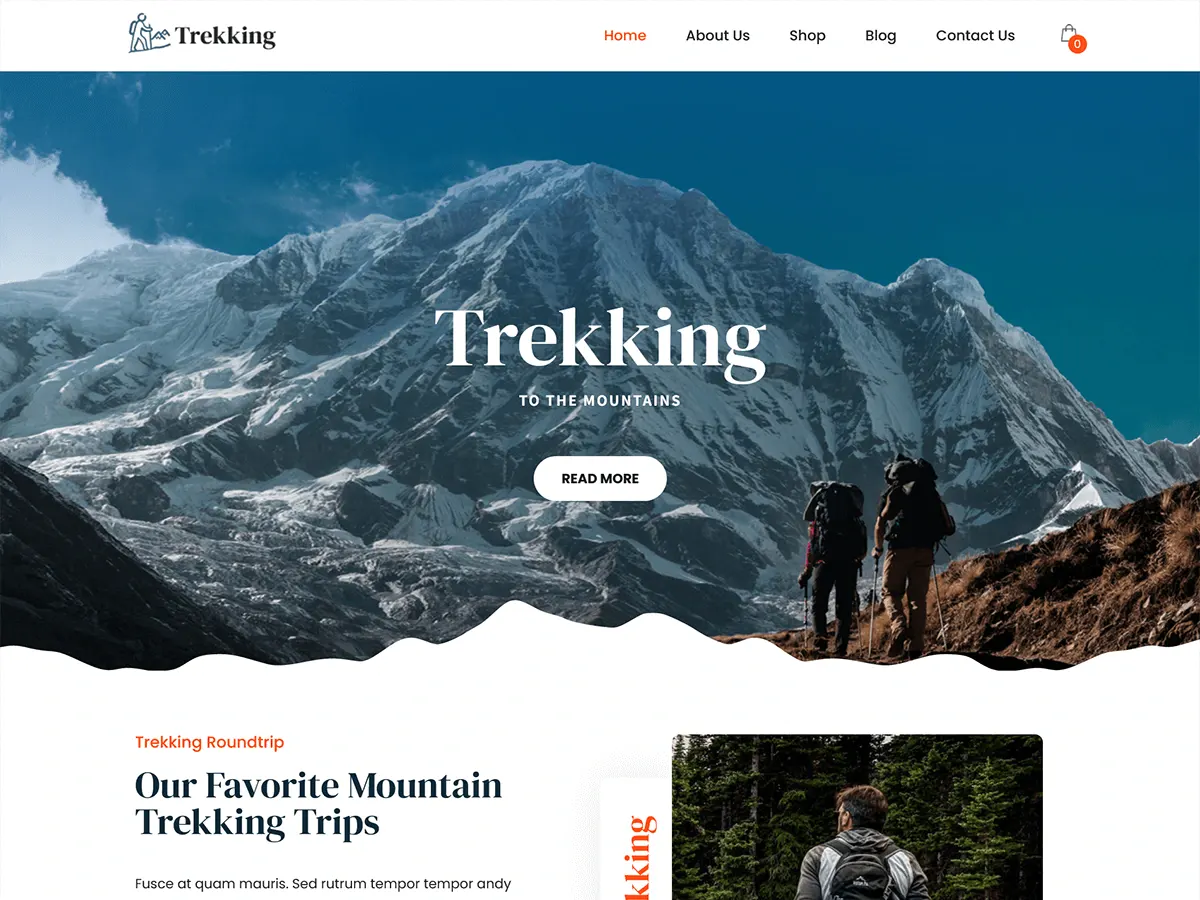
Trekking and Travel Website Development in Nepal: Complete Guide, Features, Cost and Benefits
Nepal is known around the world for its mountains, trekking routes, cultural heritage, national parks, adventure activities, and unique travel experiences. From the Everest region and Annapurna trails to cultural tours in Kathmandu Valley, jungle safaris in Chitwan, rafting adventures, and mountain expeditions, Nepal offers a diverse tourism experience for travelers from across the globe.
As more travelers use the internet to research destinations, compare itineraries, read reviews, view photographs, check prices, and make travel arrangements, having a professional website has become essential for trekking and travel businesses.
For trekking agencies, tour operators, expedition companies, travel agencies, and destination management businesses, a website is often the first interaction a potential customer has with the brand. A successful travel website needs to combine attractive visuals, detailed destination information, easy booking, itinerary management, secure communication, mobile usability, and search engine optimization.
A traveler planning a trip to Nepal may visit several websites before making a decision. They want to understand what is included in a package, how difficult a trek is, what permits are required, how long the journey takes, what accommodation is provided, what the price includes, and whether the company can be trusted. A professionally developed website can answer these questions while making it easy to take the next step.
Why Do Trekking and Travel Companies Need a Professional Website?
Travel customers often conduct extensive research before booking. Unlike an ordinary retail purchase, a trek or holiday involves significant planning, money, time, and personal expectations — so customers want confidence before reserving.
A professional website gives travel companies a central place to communicate expertise and present services. Instead of relying entirely on social media or third-party platforms, a company can use its own website to showcase trekking packages, tour itineraries, destinations, photographs, reviews, FAQs, booking information, and contact options.
A website also allows travel companies to receive inquiries from international customers at any time. Someone planning an Everest Base Camp trek from the United States, Australia, Germany, or India may visit outside Nepal’s business hours. An informative website can answer many questions immediately and allow travelers to submit inquiries or booking requests, functioning as a 24-hour marketing and lead-generation channel.
What Makes a Trekking Website Different?
A trekking website has specialized requirements. A standard company website may explain services and provide contact information, but a trekking website needs to communicate detailed information about individual experiences — multiple days, destinations, elevations, meals, accommodation, transportation, guides, permits, difficulty levels, costs, inclusions, exclusions, safety information, and preparation requirements.
A traveler should be able to discover a trek, review the itinerary, understand the requirements, compare it with other options, and contact the company without feeling overwhelmed. Good travel website development combines storytelling with practical information — beautiful photography creates inspiration while accurate itinerary information helps customers make decisions.
Essential Features of a Trekking and Travel Website
A professional trekking and travel website should provide a complete digital experience for travelers and a manageable administration system for the business.
Trekking Package Management
The trekking package system should allow administrators to create and manage different trekking experiences. Each package can contain trek name, duration, destination, maximum altitude, difficulty level, starting and ending points, best season, price, itinerary, inclusions, exclusions, accommodation, meals, transportation, permits, guide information, and preparation requirements. Administrators should be able to update package information without requiring developers for every change — especially useful for companies that frequently update prices or itineraries.
Detailed Trek Itinerary
The itinerary is one of the most important parts of a trekking website. Travelers need to understand what happens each day — walking distance, walking time, elevation changes, overnight locations, meals, accommodation, and important notes. A clear day-by-day structure helps travelers visualize the journey before booking.
Destination Pages
Destination pages help visitors discover different regions of Nepal — Everest, Annapurna, Langtang, Mustang, Manaslu, Kathmandu Valley, Chitwan, Pokhara, and more. Each destination page can explain attractions, popular activities, best travel seasons, accessibility, cultural experiences, and recommended packages. These pages are also valuable for SEO, allowing businesses to target destination-specific searches.
Trek Difficulty and Altitude Information
Not every traveler has the same fitness level. A website should clearly communicate difficulty using terms such as easy, moderate, challenging, or strenuous, with altitude, walking duration, terrain, and physical requirements. Altitude information is particularly important for Himalayan trekking — highest point, elevation changes, and acclimatization days help travelers prepare appropriately.
Trekking Map Integration
Maps significantly improve the travel planning experience by displaying stops, transportation points, and trail locations. Interactive maps help international travelers understand where the trek is located and how destinations connect. For complex routes, maps can accompany itinerary information so travelers can connect geography with the day-by-day journey.
Tour Package Management
Not every traveler visiting Nepal wants to trek. Travel agencies may offer cultural tours, sightseeing packages, wildlife tours, pilgrimage journeys, adventure activities, mountain flights, rafting, cycling, or customized holidays. The website should support different package types, each with duration, itinerary, pricing, activities, accommodation, transportation, and booking requirements.
Custom Trip Planning
Many international travelers want customized itineraries. A custom trip request form can collect preferred destinations, travel dates, group size, budget range, activities, accommodation preferences, and special requirements. The company can then prepare a customized proposal — useful for private trekking groups, families, corporate travelers, and photography-focused trips.
Online Booking System
A booking system can make the website more useful than an information portal. Customers should be able to select a package, choose a travel date, enter participant information, and submit a booking request. For fixed departures, the system can display available dates and remaining spaces. For private trips, an inquiry workflow where the company confirms availability may be more appropriate.
Travel Inquiry Forms
A well-designed inquiry form should make it easy to contact the company — name, email, country, travel dates, group size, selected package, preferred activities, and message. Long forms discourage potential customers, so fields should be useful rather than exhaustive.
Secure Online Payments
Travel companies serving international customers benefit from online payment integration. Depending on location, business structure, and banking relationships, the website may support card or other digital payments. Integration should securely communicate with the provider and correctly update booking status. Clear information about deposits, balances, cancellation policies, and refunds is particularly important for travel services.
Customer Accounts
A customer portal can help businesses that manage complex or repeat bookings — viewing itinerary, payment status, documents, invoices, and travel information. For trekking companies, the portal could centralize pre-trip information.
Reviews and Testimonials
Trust is extremely important in travel. A website can include reviews from genuine customers discussing guides, organization, communication, accommodation, trekking experience, safety, and overall satisfaction. Authentic feedback provides more credibility than promotional statements and can be connected to specific trekking packages.
Photo and Video Gallery
Travel is highly visual. A trekking website should showcase landscapes, trails, villages, mountains, accommodations, guides, cultural experiences, and previous groups where permission has been obtained. Short videos can show routes, landscapes, or customer journeys. Media should be optimized for performance — large uncompressed images can make pages slow on weaker mobile networks.
Travel Blog and Destination Guides
A blog can become one of the strongest long-term marketing tools for a trekking company. Potential travelers search for information about the best time to trek, trekking permits, packing lists, altitude, transportation, accommodation, weather, routes, cultural etiquette, costs, and preparation. Well-maintained travel guides can answer these questions while attracting organic search traffic.
Search Engine Optimization for Trekking Websites
SEO is particularly valuable because travelers frequently use search engines while planning trips. A website can target searches related to destinations, trekking routes, experiences, itineraries, costs, seasons, and tour packages — for example, dedicated pages targeting Everest Base Camp Trek, Annapurna Circuit Trek, Langtang Valley Trek, or Nepal tour packages.
Successful travel SEO requires more than repeating destination names. Pages should provide comprehensive, genuinely useful information. Technical SEO is equally important — search engines should crawl efficiently, understand the site structure, and index important pages. Images should have meaningful alt text, pages should load quickly, internal links should connect related destinations, and URLs should remain clean.
International SEO for Nepal Tourism Businesses
Many trekking companies target customers outside Nepal. A website can target travelers searching from the United States, United Kingdom, Australia, Europe, India, and other regions, using clear international English and addressing concerns of international travelers. Businesses targeting multiple languages may consider localized content, with site architecture planned carefully for multi-language SEO.
Mobile-Friendly Travel Website Development
Travelers frequently research trips from smartphones. A mobile visitor should be able to browse packages, read itineraries, view photographs, check prices, submit inquiries, and contact the company without difficulty. Large images need responsive sizing and optimization, buttons should be easy to tap, and forms should work on small screens. A mobile-first approach improves experience for both domestic and international visitors.
Website Speed for Travel Businesses
Travel websites often contain large photographs, galleries, maps, videos, booking systems, and third-party services that can slow pages. Developers should compress images, use modern image formats, lazy load media, optimize JavaScript, use caching, and select suitable hosting. Fast performance matters because visitors may access the website while traveling or on mobile networks — a beautiful site that takes too long to load can lose customers before they see the content.
Trekking Website Security
A travel website may handle personal information, booking data, payments, and other sensitive information. The website should use HTTPS, secure authentication, protected administrative access, proper authorization, input validation, secure payment integrations, regular backups, and monitoring. Customer information should only be collected when necessary and handled responsibly. Administrative accounts should use strong passwords and appropriate access controls.
Trekking Website Admin Dashboard
The administrative dashboard is essential for managing the website efficiently. Staff should be able to manage packages, tours, itineraries, prices, departures, inquiries, bookings, customers, reviews, blog content, and images from one place. Role-based access lets a content manager update blog posts without access to financial or payment settings.
Integration With Travel and Business Tools
A trekking website may need to connect with payment providers, email platforms, SMS services, CRM systems, analytics tools, maps, accounting software, booking platforms, and customer support systems. Integration reduces repetitive manual work — for example, when a customer submits an inquiry, the system can send an acknowledgment email and create a CRM lead automatically.
Trekking Website Development Process in Nepal
Professional development begins with understanding the travel company’s business model — services offered, target markets, booking process, payment requirements, content structure, staff workflow, and future plans. The next stage is information architecture and UI/UX design, making it easy for travelers to discover destinations, packages, tours, and resources.
Once the design is approved, developers build the frontend and backend systems. Third-party integrations are then connected and tested. Before launch, the system should undergo functional, responsive, performance, security, and usability testing. After deployment, the website should be monitored and maintained.
Choosing the Right Technology
The technology stack should reflect the project’s complexity. A smaller travel company may use a content management system with booking capabilities, while a larger agency may require a custom platform with dedicated backend and administrative systems. Modern frameworks such as Next.js enable high-performance frontends, paired with backends such as Django, Laravel, or Node.js.
The right choice depends on booking complexity, integrations, expected traffic, content management, scalability, development resources, and long-term maintenance. Technology should support the business rather than become the main objective.
How Much Does Trekking Website Development Cost in Nepal?
The cost of trekking and travel website development in Nepal varies depending on features and complexity. A basic travel website containing company information, destination pages, packages, galleries, blog functionality, and inquiry forms may require a modest investment. An advanced platform with online booking, payment integration, customer accounts, availability management, custom itineraries, CRM integration, and an administrative dashboard will require considerably more.
A general estimate:
| Project Type | Approximate Cost in Nepal |
|---|---|
| Basic Travel Website | NPR 30,000 – 60,000 |
| Professional Trekking Website | NPR 60,000 – 1,00,000 |
| Advanced Travel Booking Website | NPR 1,00,000 – 1,50,000 |
| Custom Trekking & Travel Platform | NPR 1,50,000 – 2,00,000 |
| Large Travel Management Platform | NPR 2,00,000+ |
The final cost depends on design complexity, number of pages, package management, booking functionality, payment integrations, CRM connections, customer portals, content requirements, administrative features, third-party services, and development technology.
How Long Does Travel Website Development Take?
Development time depends on project scope. A basic informational website can be completed in a few weeks when content and design are clearly defined. A professional trekking platform with custom booking, payment processing, customer accounts, itinerary management, and administrative workflows may require several months. A realistic schedule should include design approval, development, content preparation, testing, revisions, deployment, and post-launch adjustments.
Common Mistakes in Trekking Website Development
Common mistakes include using beautiful photography while providing insufficient practical information, presenting every package with the same generic template, poor navigation, complicated booking forms, sparse payment and cancellation details, slow image-heavy pages, and ignoring SEO until after launch — which leads to weak URL structures and technical problems more difficult to fix later. A successful trekking website should address these during planning and development.
How to Make a Trekking Website More Effective
A strong trekking website should answer the questions travelers have before contacting the company — what the company offers, where the trip goes, how long it takes, how difficult it is, what is included, what it costs, when to travel, and how to inquire. Trust should be visible throughout via guides, company experience, licenses, customer reviews, safety practices, and transparent policies.
Calls to action should be clear — Book Your Trek, Request a Custom Itinerary, Check Availability, Talk to a Travel Expert, or Send an Inquiry.
Why Content Matters for Travel Websites
Content is one of the biggest assets of a trekking website. Travelers spend considerable time researching before booking, creating many opportunities for useful content — destination guides, preparation advice, itinerary explanations, seasonal information, cultural resources, transportation guides, packing recommendations, and FAQs.
Someone who reads a detailed guide written by a knowledgeable trekking company may be more likely to consider that company when it is time to book. Content should be written for travelers first and search engines second.
The Future of Trekking and Travel Websites in Nepal
Travel technology is likely to become increasingly personalized and interactive — smarter itinerary recommendations, real-time availability, conversational customer support, personalized package suggestions, interactive maps, immersive video, automated communication, and integrated booking experiences.
AI can support certain travel operations, including answering common questions, assisting with itinerary planning, organizing inquiries, and providing personalized recommendations. However, technology should not replace the human expertise that makes travel valuable — experienced guides, local knowledge, safety planning, cultural understanding, and reliable communication remain essential. A website should make that expertise easier to discover.
Final Thoughts
Professional trekking and travel website development in Nepal can help tourism businesses build a stronger online presence, attract travelers from Nepal and international markets, and turn website visitors into inquiries and bookings.
A successful travel website combines compelling storytelling with practical information. It should showcase destinations beautifully while clearly explaining itineraries, difficulty, altitude, pricing, inclusions, transportation, accommodation, availability, and booking requirements. The website should also be fast, mobile-friendly, secure, search-engine optimized, and easy to manage.
For a trekking or travel company in Nepal, the website should ultimately function as more than an online brochure. It should become a digital sales and communication platform that works continuously to attract travelers, answer questions, establish trust, generate inquiries, and support bookings.
With thoughtful planning, strong design, useful travel content, reliable technology, and an effective digital marketing strategy, a professionally developed trekking website can help a Nepal-based travel business compete in an increasingly digital global tourism market. Talk to our team.